Bright Paint, Dark Water: Buying Wigan Canal Ware With Your Eyes Open
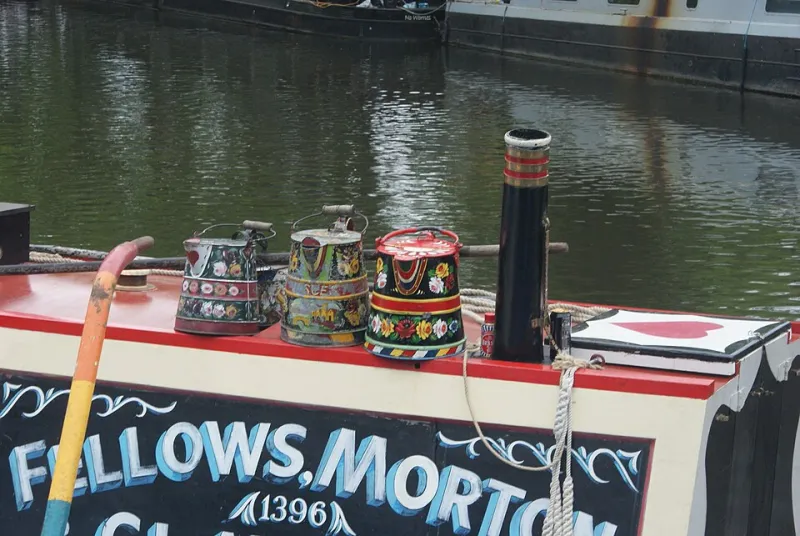
Photo: Robert Lamb , CC BY-SA 2.0, via Wikimedia Commons
Wigan and water have never been strangers. The Leeds and Liverpool Canal runs through the borough like a long, slow thought, and the boatmen and families who worked it left behind a bright trail of painted domestic ware: buckets, jugs, lace plates, cabin ornaments and small souvenirs that still turn up in car boots and antiques centres. It is cheerful stuff, often inexpensive, and just tricky enough to keep you on your toes. The trick is to enjoy the paint without ending up in the cut.
What counts as canal ware?
The phrase covers a loose family of objects rather than one neat category. The classics are painted metal or wooden buckets, often with roses, castles, landscapes or simple bands of colour; lace plates with pierced rims, made for hanging on a cabin wall; small wooden or ceramic ornaments; and souvenir pieces sold at canal-side shops and festivals. Some pieces are practical, some are purely decorative, and plenty sit somewhere in between.
Authentic canal ware is not always marked. A boat name, a painter's initials or a shop stamp can help, but many pieces were made by jobbing painters or bought from catalogues. Look at the way the paint sits, the wear around handles and rims, and the honesty of the repairs. A bucket that has been used for coal or water will usually show scuffing where it was gripped, and the base will tell its own story.
Original or recently aged?
Reproduction canal ware is everywhere, and some of it is perfectly pleasant. The problem is when it is sold as old. Modern pieces often have a printed or stencilled look, with roses that repeat too neatly and colours that are too flat. Aged reproductions may be rubbed with wire wool, stained with tea, or given fake rust and modern nails. Turn the piece over. Fresh sanding, uniform distressing and screws where you would expect hand-cut joints are all worth a second look.
Genuine wear is uneven. Paint thins where hands have held the object, not where a sander has been taken to it. Old metal has a weight and a dullness that is hard to fake, and old wood usually has a patina that feels dry rather than sticky. Crazing, small chips and old touch-ups are not automatically bad signs. A piece that has clearly been loved is often more convincing than one that looks as if it has been through a stage-managed accident.
What to pay in 2026
At local fairs and car boots, common reproduction pieces should be cheap: think £5 to £20 for a small decorative plate or bucket. A decent original lace plate might be £8 to £25, while a painted bucket with good colour and honest wear can run from £40 to £120. Cabin ornaments and small souvenirs often sit between £15 and £60. Pieces with a boat name, a local shop connection or strong provenance can push higher, but you should still be buying the object in front of you rather than a story.
Wigan buyers have an advantage: canal ware is part of the local landscape, so it turns up at reasonable prices. Check antiques centres, charity shops, canal festivals and the sort of house clearance stalls that appear on a Sunday morning. Ask where a piece came from, but do not treat the answer as gospel. A good rule is to pay what you would be happy to live with if the provenance turns out to be family folklore.
Where to look around Wigan
Keep an eye on local antiques fairs, car-boot sales and canal-side events. Wigan Pier and the Top Lock area have obvious canal connections, and the borough's older villages still produce house clearances with painted odds and ends tucked away in sheds. Haigh Hall and the surrounding green spaces host events where folk sellers appear, and the smaller church and community fairs can be surprisingly good for domestic curios.
Do not ignore the humble bucket. It is the workhorse of canal ware and often the most affordable way into collecting. A single well-worn bucket with good roses can anchor a shelf, and it does not demand the display space of furniture. Lace plates are easier still: hang a small group of them together and the wall does the work.
The stories that stick
Canal ware appeals because it is domestic history with the brightness turned up. These were objects used in small cabins, carried between locks and tied to a way of life that has largely gone. A painted bucket is not a grand antique, but it is a genuine relic of working life. The best pieces have a bit of swagger: a wobbling rose, a castle painted with more enthusiasm than accuracy, a handle worn smooth by somebody's hand.
That is also why condition matters less than character. A perfect reproduction may look tidier, but it will not have the same conversation in it. Buy the piece that makes you wonder who used it and where it hung. Keep a note of where you found it and what you paid. In a few years, that scrap of paper will be part of the object's story.
A sensible way to collect
Start small. One bucket, one plate, one odd little ornament is enough. Avoid heavily restored pieces unless they are very cheap, and be cautious with old paint, especially if you are sanding or scraping anything. Display pieces away from damp, and do not overclean them. A soft brush and a dry cloth will do more good than a bucket of soapy water.
Above all, do not let the fear of reproductions spoil the fun. Learn the difference, pay accordingly, and enjoy the chase. Wigan's canal ware is bright, cheap enough to take a chance on, and full of local life. Just keep your feet dry and your eyes open.