Twang for Your Money: A Buyer's Guide to Wigan Dialect Books and Local Almanacs

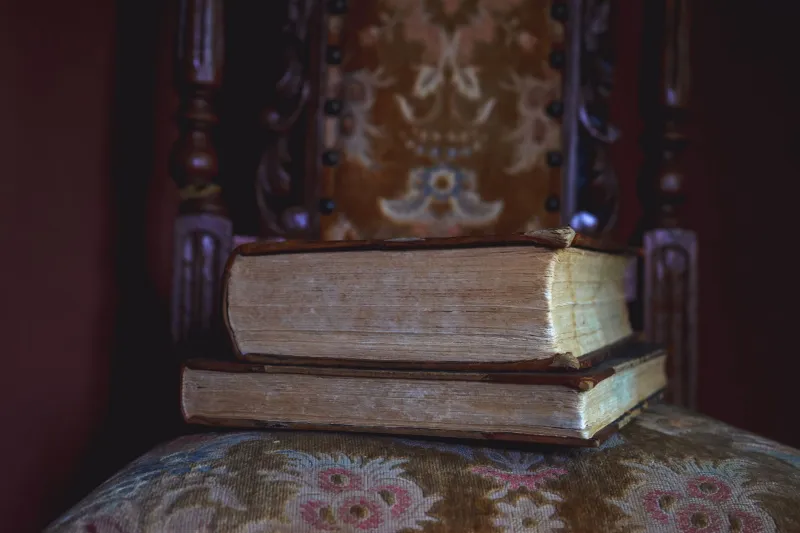
There's a particular sort of booklet that turns up again and again at the bottom of a box at Orrell car boot or on a trestle table outside a charity shop in Standish. Thin, soft-covered, a bit foxed, often with a title like Wigan Dialect Recitations or The Lancashire Almanack for 1911 stamped in faded gold on a cloth spine. Nine times out of ten it's a fiver. The tenth time, someone wants forty quid for it and swears it's rare.
Both of those prices can be right — but only if you know which one you're looking at. Dialect books and local almanacs are the paper equivalent of a good pint: cheap, cheering, and easy to get carried away with. Here's how to keep your head.
What You're Actually Looking At
Two closely related families of paper turn up under this heading.
Dialect books and pamphlets are the printed record of how people round here actually talked — or, more accurately, how local writers liked to think people talked. Expect verse, comic monologues, "conversations" between two named characters (usually a canny old bloke and his long-suffering wife), dialect glossaries, and the odd bit of sentimental verse about mills, pit stacks and Christmas. They were sold cheaply, bought as gifts, and read to pieces.
Local almanacs were the pocket diary of their day: a calendar, moon phases, tide tables, fair dates, a bit of astrology nobody took too seriously, and — crucially for us — page after page of advertising from Wigan tradesmen. Ironmongers, tripe dressers, coal merchants, insurance agents, bicycle shops. That advertising is your best dating tool and, frankly, the best social history in the whole book.
A word of warning on terminology. Dialect writing from this corner of the world blurs into "Lancashire dialect" generally, and plenty of Wigan bookshelves held volumes by writers from further afield. That's fine — collect what you like — but don't let a seller charge Wigan-local prices for a general Lancashire anthology.
The Imprint Is Your Friend
Before you look at the price, look at the bottom of the title page. The printer's imprint tells you more than any cover ever will.
Ask yourself three things:
- Who printed it, and where? A Wigan or nearby Lancashire printer's name with a local address is a good sign of a genuinely local imprint. London imprints on a dialect book usually mean either a big commercial publisher or a later reprint.
- Is there a date on the title page and the wrapper? Reprints often carry a fresh date on the cover while the title page still shows the original. Mismatches are a tell.
- Does it say "facsimile", "reprint" or "reproduced from the original"? Modern local-history societies have done wonderful work reprinting these things, and they're perfectly nice to own — but they should be priced like a modern paperback, not an antique.
Also read the adverts at the back. A note for a shop that you can date from trade directories, or a testimonial dated a year or two before the title page, is gold.
Dating Without a Printed Date
Plenty of these booklets are undated, which spooks new collectors into leaving them behind. Don't. Look at:
- The adverts. Prices in old money, a telephone number with only three or four digits, or a dealer advertising "motor cars" alongside horse feed will pin you within a decade.
- The typography. Heavy Victorian display type on the cover, art-deco borders inside, or a plain wartime austerity wrapper all say something.
- The dedication and preface. Local worthies named in a preface can usually be looked up. A preface thanking subscribers for a "second edition" tells you it was popular enough to reprint.
- The almanac year itself. Almanacs are obligingly dated in the title — but check the calendar pages against the year claimed. Almanacs were often sold in the autumn for the following year, so a book "for 1911" was on the shelves in late 1910.
The Reprint Trap
This is where money gets lost. Dialect booklets were reprinted constantly — by the original publisher, by local newspapers, by heritage groups in the 1970s, and again in the last twenty years. A clean modern reprint is a lovely reading copy. It is not a £40 antique.
Quick checks: modern paper feels different under the thumb, usually smoother and more uniform; reprints often have a publisher's blurb or ISBN on the back; and a suspiciously crisp copy with a 1990s-looking cover but an 1890s title page is almost certainly a facsimile. If a seller says "it's old, that date's on the front", ask which date is on the title page verso. Watch what happens.
Completeness and Condition
These were cheap books, and cheap books get treated cheaply. Expect foxing, expect a child's pencil scribbles, expect a pressed flower at page 32.
What actually matters:
- The wrapper. Many pamphlets were issued in printed paper covers and most lost them. A survivor with its original wrapper is worth noticeably more than a bare copy.
- All the pages. Check the last gathering — recitation booklets often lost their final page or two. Count plates if any are listed.
- No tape. Old Sellotape has usually gone brown and brittle and is quietly eating the paper. Price it as damage.
- Loose gatherings are fixable; missing pages are not. A professional re-sew is cheap. A missing poem is permanent.
What to Pay in 2026
Rough ladder, based on what actually shifts at fairs and online:
- Common undated dialect pamphlets, tatty, incomplete: £3–£8. Buy them to read.
- Good complete copies with original wrappers, local imprint, dated: £15–£35.
- Scarce local almanacs with strong Wigan advertising, complete and sound: £20–£50, occasionally more for a really early or unusually well-illustrated one.
- Modern reprints and facsimiles: £4–£10. Full stop.
- Signed or inscribed copies by a named local dialect author: add a premium, but only if the signature can be checked against a known example.
If a dealer is asking three figures, ask them what's scarce about it. A good answer is specific. A bad answer involves the word "old".
The Fun Bit
Don't buy these as an investment. Buy them because a Wigan almanac from the 1900s is a miniature of the town — who was selling what, which chapels were raising funds, what the weather was supposed to do in March. Buy them because dialect verse, read aloud, is genuinely funny in a way that printed jokes rarely are.
Our advice: keep a small shelf, buy the scruffy ones cheap, upgrade only when a better copy turns up, and read them before you bag them. The whole point of a paper curio is that it's meant to be opened. Ay up — that's the deal.