Pier Pressure: A Collector's Guide to Wigan's Most Misunderstood Landmark
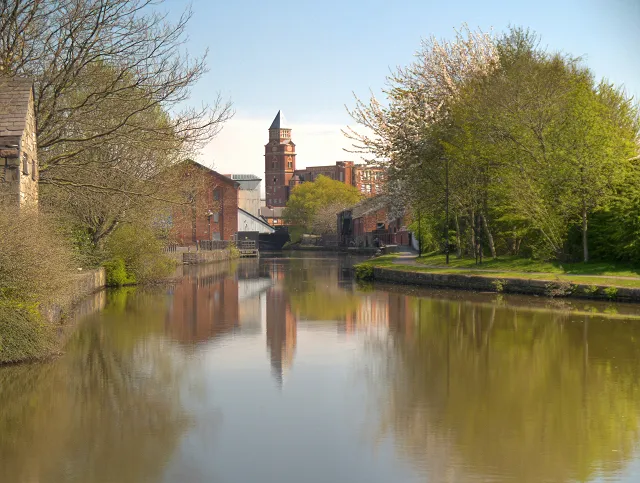
Photo: David Dixon , CC BY-SA 2.0, via Wikimedia Commons
Every town has a landmark that outsiders get wrong. Wigan has the undisputed champion.
Ask a stranger to picture Wigan Pier and they will give you deckchairs, a brass band and a gull on a post. Ask anyone who has stood at the bottom of Wallgate on a wet Tuesday and they will tell you the truth: it is a wharf. A coal wharf on the Leeds and Liverpool Canal, with iron rails set into the setts and a warehouse that has spent a century being photographed by people who arrived expecting something else entirely.
That gap between expectation and reality is exactly why the pier is such a fertile hunting ground for collectors. Almost everything made about the place is a joke, a correction or a souvenir of a disappointment — and objects with that much attitude rarely stay cheap forever.
A pier with no sea
The name is usually put down to local sarcasm. Victorian Wigan had a busy canal basin behind the warehouses, with coal tipped from wagons into barges, and at some point the loading staithe picked up a grander title than it deserved. Music hall comedians seized on it. By the 1930s it was a national punchline, which is roughly when George Orwell turned up on his bicycle expecting something romantic and found coal dust, a wooden jetty and a great deal of honest industry instead. His account in The Road to Wigan Pier fixed the misunderstanding in print for good.
Then came the turn. In 1986 the wharf was rebranded as a heritage attraction — the Wigan Pier Experience, with a museum, a theatre company and the great steam engine at Trencherfield Mill pulling in school parties by the coachload. The attraction closed in 2018 and the site has been the subject of redevelopment talk ever since, but the best part of four decades of visitor traffic left behind a wonderful paper trail of tickets, guidebooks, badges and tea towels.
That is the material a collector is dealing with, and it falls into four fairly tidy groups.
What the souvenir trade actually made
Postcards. The richest seam by far. Wigan was well served by the big publishers — Tuck's, Valentine's, the local stationers — and the best cards show the basin with narrowboats working, trams rattling along Wallgate, and mill chimneys standing behind the warehouses. Real photographic cards from the 1900s to the 1930s are the ones to want; they show the wharf as a working place rather than a visitor attraction.
Crested china and pottery. Wigan crests turn up on Goss-style cottages, small jugs, pin trays and model boats. Quality varies enormously, and plenty of it is 1950s and 1960s tourist ware rather than Edwardian.
Canalware. Decorated buckets, dippers, mugs and water cans in the traditional roses-and-castles style. Beautiful, useful, and absolutely riddled with modern reproductions — more on that below.
Railway and transport ephemera. Wigan Wallgate and Wigan North Western name totems, Lancashire and Yorkshire Railway tickets, timetables, wagon plates and the paperwork of the coal trade. This is the serious-money end of the market.
Add the novelty oddities — brass plaques, joke 'seaside' postcards, ashtrays, keyrings, George Formby sheet music and 78s — and you have a collection that can be assembled for pocket money or pursued for decades.
The £3 box and the £300 totem
What should you expect to pay in 2026? Prices wobble with condition and provenance, and the northern postcard trade is softer than it was a decade ago, so buy what you like rather than what a dealer promises.
- Common Wigan Pier view postcards, posted or unposted: £3–£8 each.
- Rarer real-photographic cards showing trams, boats working the basin or a named local photographer's imprint: £15–£40.
- Wigan crested china, small pieces: £10–£30; named-pier souvenir ware a little more.
- Wigan Pier Experience guidebooks, programmes and tickets from the 1986–2018 era: £5–£20 the lot, and rising slowly as nostalgia catches up.
- George Formby 78s: £5–£15 for common titles, considerably more for signed sleeves or early labels.
- Uncle Joe's Mint Balls tins and advertising: £8–£25.
- Enamel railway totems reading Wigan Wallgate: £180–£450, depending on condition and whether the flange is intact.
- Brass or cast-iron 'Wigan Pier' wall plaques of the gift-shop era: £10–£25.
Spotting a reproduction
This is where the pier collector earns their stripes, because the name is famous enough to attract fakes and 'vintage style' tat in equal measure.
Look at the dots. Genuine old postcards are printed with a halftone screen. A cheap loupe will show a neat grid of dots; a modern laser reprint looks flat, glossy or slightly pixelated. Turn the card over, too — period cards have a proper divided back, a publisher's name and often a stamp and postmark that can be dated precisely.
Feel the enamel. Real vitreous enamel is glass fused to steel. It is heavy, cool to the touch, and where it chips the bare metal shows dark. The brightly coloured 'antique' signs on online marketplaces are usually screen-printed tin with a printed rust effect. If it is under £15 and looks 100 years old, it is neither.
Distrust uniform ageing. Canalware should have wear where hands have held it and daylight fading on one side only. Reproductions are sanded in the same places and painted with tea. Real roses-and-castles work has a looseness to the brushwork; copies are stiff and symmetrical.
Ask what it is made of. Resin cast to look like cast iron is light and warm. Genuine metal is cold and heavy. This single test settles most arguments.
Where to hunt close to home
Charity shops along Wallgate and Standishgate still turn up pier postcards in bundles, usually priced at pennies because nobody has looked closely. Car boot sales around Robin Park and the weekend markets are good for box lots of local paper. The big antiques centres within easy reach — Bygone Times at Eccleston being the obvious day out — carry crested china and canalware in quantity. And on eBay, save a search for 'Wigan Pier' with notifications on: the good cards sell within hours, often mis-described as 'canal scene, northern town'.
One last piece of advice. Store postcards in acid-free sleeves, keep enamel out of damp sheds, and never polish the patina off brass. Then take the lot down to the wharf itself, stand where Orwell stood, and enjoy the joke that has been running for more than a century.