Basket Cases and Brass Rings: A Wigan Pigeon Club Buyer’s Guide
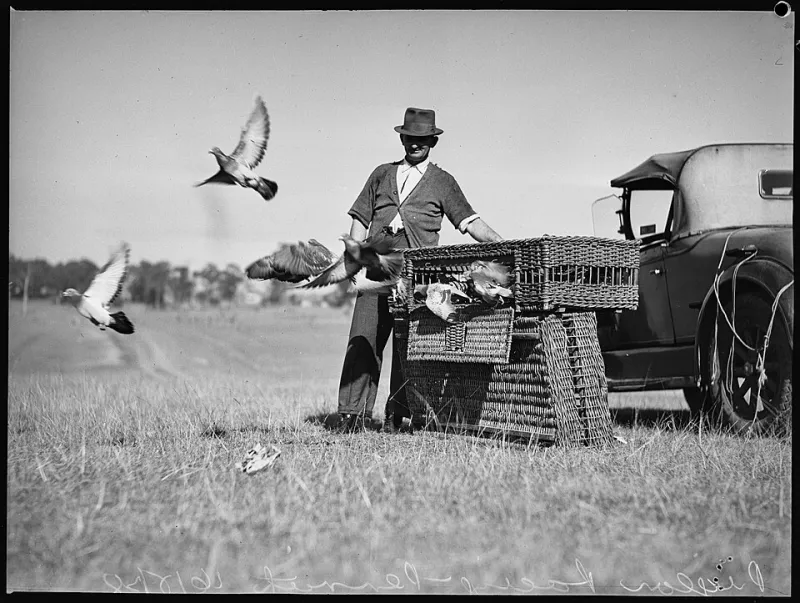
Photo: Norman Herfort, Public domain, via Wikimedia Commons
Pigeon racing doesn’t shout about its history. It never did. The sport lived at the back of allotments, in shed lofts off Bickershaw Lane and in clubrooms where the tea urn mattered as much as the stopwatch. That quietness is exactly why the memorabilia is still affordable — and why it’s easy to be sold a dull bit of metal with a romantic story attached.
If you’re browsing a car boot in Hindley or watching a box of odds and ends close on an online auction, pigeon-club material can be genuinely rewarding. You just need to look past the feathers.
Start With the Paper, Not the Silver
The best entry point isn’t a trophy. It’s paper. Old race sheets, club membership cards, result sheets, committee minutes, entry forms and handwritten loft records turn up in house clearances for very little money. They’re also the easiest things to date honestly.
Look for the club name first. Wigan had dozens of small clubs and federations over the decades, often tied to pubs, working men’s clubs, allotment societies or particular streets. A race sheet with a Wigan pub address and a secretary’s name is a proper piece of local history, even if the paper is foxed and the corners are soft. Check the date against the race programme, the bird ring numbers and the printer’s details. A sheet printed by a small Wigan firm can be more useful than a fancy certificate with no provenance at all.
Don’t dismiss duplicate paperwork. A bundle of result sheets from one club across several seasons tells a better story than a single glamorous item. It shows how many members there were, which lofts dominated, and how the club handled bad weather and lost birds. That’s the sort of quiet detail collectors grow to love.
Clocks, Rings and the Smell of Old Wood
Clocking-in timers are the mechanical heart of the hobby. These are the devices that recorded a bird’s arrival time, usually by means of a rubber ring or a thimble-like countermark. They’re handsome things in a workshop sort of way — brass, enamel, bakelite, printed dials and awkward little keys. Common names include Junghans, Benno, Toulet and STB, though plenty of clubs used whatever the local agent could supply.
Condition matters, but completeness matters more. A clock without its key, its carrying case or its associated rings is a display piece, not a working relic. Check that the dial glass is original, the hands move freely, and the serial numbers haven’t been scrubbed. Reproduction and ‘married’ clocks exist, often made from assorted parts and sold with a cosy story about a Wigan loft. Be sceptical of anything described as ‘fully restored’ if the seller can’t explain what was replaced.
Bird rings — the small rubber or plastic bands fitted to a pigeon’s leg — are cheap, colourful and easy to misidentify. Most carry a club or federation code, a year and a serial number. A ring with a clear year is a useful dating tool; a ring with no markings at all is a curiosity, not a document. Don’t pay a premium for a handful of loose rings unless they came with paperwork that ties them to a local club. On their own, they’re pleasant little things but not much more.
What ‘Local’ Really Means
This is where buyers get caught. The word ‘Wigan’ on a label adds a shiver of romance, but it doesn’t automatically add value. A trophy engraved ‘Wigan Pigeon Club’ may have been made in Birmingham and presented in 1958. That’s fine — it’s still local history — but you shouldn’t pay a huge premium for the name alone.
Ask what the ‘local’ claim actually rests on. Is it an engraved club name? A presentation plaque? A handwritten label from a house clearance? A seller’s memory? The strongest local pieces have a chain of evidence: a club name, a date, a member’s name, maybe a photograph or a race sheet that matches. The weakest have a sticker and a hopeful price.
Also watch for generic silver-plated trophies with a Wigan address added later. Engraving can be sharpened, extended or invented. If the lettering looks fresher than the wear around it, or if the club name sits awkwardly on a shield that was clearly made for another purpose, walk away or pay only what you’d pay for the object itself.
Trophies: Shine Isn’t Everything
Pigeon-club trophies are usually modest: small cups, shields, plinths and medal-style pendants. They were bought to be useful, not grand. That means you’ll often find silver plate rather than solid silver, and a fair amount of base metal with a shiny finish.
Solid silver is worth checking for hallmarks, but don’t assume every pigeon trophy is precious metal. Most aren’t. The real value is in the engraving and the story. A small cup for ‘Best Young Bird, Ince Club, 1972’ is far more interesting than a large anonymous shield. Look for member names, club names and dates that can be checked. A trophy with a long list of winners on the base is a little archive in itself.
Reproduction trophies are common in the antiques trade generally, but outright fakes in pigeon memorabilia are less frequent than optimistic ‘restorations’. A new base, a replaced handle or a fresh engraving can turn a common cup into a supposedly important piece. Ask questions. A dealer who knows their stuff won’t mind.
A Fair Price for Fancier History
Most pigeon-club paper is still inexpensive. Expect to pay a few pounds for a single race sheet, more for a good bundle with local names and dates. Clocking-in timers vary widely: common models in working order can be found for modest money, while unusual makers or complete sets with boxes and rings attract more. Trophies are usually cheaper than their size suggests because the market is small. That’s good news for collectors.
The danger is ‘themed’ pricing. A seller who has suddenly decided a dusty timer is a ‘Wigan heritage artefact’ may add a zero. Compare like with like. Search completed sales, not asking prices. Look at what similar clocks and club lots actually fetch. If a piece is being sold purely on atmosphere, you’re allowed to smile and move on.
Before You Hand Over Your Cash
Give the object a gentle once-over. Paper should be dry, not mouldy; a little foxing is fine, active damp is not. Clocks should be checked for loose movements, cracked dials and missing keys. Trophies should stand straight, with engraving that matches the period of the piece. Ask about provenance, but don’t demand a documentary trail for every humble result sheet — sometimes a house clearance is just a house clearance.
And remember why these things matter. Pigeon racing was a working-class sport built on patience, routine and local pride. The memorabilia is modest because the sport was modest. That’s the charm. You’re not buying a museum piece. You’re buying a Saturday morning, a shed, a clock, and a bird coming home. In Wigan, that’s history enough.