The Name on the Corner: Judging Wigan Street Plates With a Cool Head
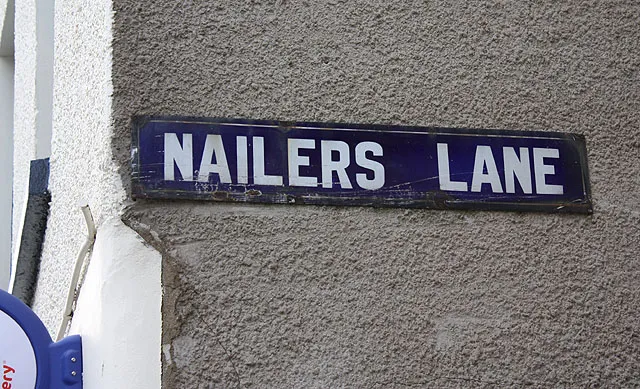
Photo: Pauline Eccles, CC BY-SA 2.0, via Wikimedia Commons
Street signs are funny things. Most of us walk past them for decades without seeing them. Then one turns up at a car boot in a plastic crate, propped against a tea urn, and suddenly it looks like a piece of local history with a price tag. That is the moment to slow down. Old Wigan street plates and boundary signs are genuinely collectable, but they sit in a messy middle ground between architectural salvage, council property and decorative repro. A cool head saves you money.
First, Know What You Are Looking At
Enamel street nameplates were made for legibility, not for collectors. The best ones are vitreous enamel fired onto steel, which gives that glassy surface and the familiar chip-and-rust pattern when they fail. Others are cast iron, pressed aluminium, or later composite boards. Boundary plates are a separate breed: solid, often heavier, and usually lettered with the name of the authority rather than the street. In Wigan you will see references to the old County Borough of Wigan, Wigan Rural District and, after the 1974 reorganisation, the Metropolitan Borough. That date matters. A plate saying Wigan is not automatically Victorian, and a plate saying Metropolitan Borough is not automatically modern tat.
Local names help you place a sign. Wallgate, Whelley, Scholes, Orrell, Standish, Hindley and Ashton-in-Makerfield all have their own flavour, and street furniture from each area turns up in different conditions. A sign from a busy main road will often be more battered than one from a quiet cul-de-sac. That is useful evidence, not a flaw.
Lettering, Edges and Fixings
Dating by eye is never exact, but the details talk. Older enamel signs tend to have slightly uneven letter spacing, a hand-lettered feel, and edges that have taken knocks. Chips usually have a sharp rim with rust blooming underneath. Reproduction signs often have a painted-on chip, a perfect font, or a clean laser-cut edge that looks too crisp for something supposed to have hung outside for fifty years.
Look closely at the fixing holes. Original plates were screwed to walls with countersunk screws, and the holes often elongate or wear oval over time. Rust shadows around the holes are a good sign. Modern copies frequently use neat keyhole slots, uniform drilled holes, or adhesive pads. A magnet can tell you whether the body is steel or aluminium, but it will not tell you the age. Plenty of old signs are aluminium, and plenty of new ones are steel.
The reverse is just as revealing. Old enamel often has a mottled, slightly rough back where the vitreous layer was applied. Reproductions may be powder-coated, vinyl-faced, or finished with fake rust paint. If the seller cannot tell you whether the lettering is enamel or vinyl, assume modern until proven otherwise.
Provenance Is the Awkward Bit
Street furniture usually belongs to someone. Councils own most street nameplates, boundary signs and notice boards, and removing them without permission is not a victimless hobby. That does not mean every old sign on a market stall is stolen, but it does mean you should ask a direct question and listen carefully to the answer. A receipt from a salvage yard, an auction lot number, or a clear story about a property renovation is worth more than a shrug and a claim that it was found in a skip.
Be wary of plates with fresh bolt stubs, cut brackets or a back that is cleaner than the front. Those details can suggest a recent removal rather than a rescue. If a sign is still attached to a wall, leave it there. If the seller gets vague when you ask where it came from, walk away. There will be another sign. A bargain is not a bargain if you feel uneasy every time you look at it.
Reproduction Radar
Reproduction enamel signs are everywhere, and some are rather good. The problem is when they are priced as antiques. Common giveaways include lettering that is too perfect, colours that are too bright, a thin and tinny feel, and a back that looks like a fridge magnet. Fake rust is usually painted in soft brown patches rather than growing out of a genuine chip.
Compare any serious candidate with old photographs. Wigan Local Studies and local archive collections can show you what street plates looked like in different periods. Manufacturers' marks on the reverse can help, but their absence proves little. If you are buying for decoration, a good repro is fine. If you are buying for a collection, pay reproduction money for reproduction signs.
Hanging It Without Regret
These things are heavier than they look, especially boundary plates. Fix into masonry or solid timber, not plasterboard alone. A French cleat or a timber batten spread across the wall is kinder than two small screws. Use rubber washers behind enamel plates so you do not crack the surface when tightening. Keep signs out of damp rooms and direct sunlight, and resist the urge to strip every bit of patina. The wear is the story.
In a small UK home, one good sign on a plain wall beats six crowded together. Give it space, check the wall can take the weight, and insure anything valuable. If a plate is particularly rare or fragile, consider a simple custom frame rather than drilling fresh holes.
A Quick Field Checklist
- Read the lettering for period style, spacing and signs of handwork.
- Check the edges and fixing holes for honest wear.
- Look at the back for enamel texture, rust and modern coatings.
- Ask where it came from and expect a clear answer.
- Compare the price with known reproduction costs.
- Walk away from anything that looks freshly removed.
- Measure the wall before you fall for a heavy boundary plate.
Street plates are modest things, but that is part of the appeal. They are the quiet punctuation of a town, and the good ones carry real wear from real weather. Buy carefully, hang sensibly, and let the name on the corner do the talking.