Small Print at the Turnstile: Judging Wigan Warriors Keepsakes on Paper, Not Hype
Wigan Warriors keepsakes have a way of turning sensible car-boot browsers into misty-eyed bidders. A folded programme, a faded ticket stub, a badge with a rusted pin — none of it looks expensive until a seller mentions Central Park or a Challenge Cup final. The trick is to slow down and read the small print. Paper, metal and fabric all tell you more than the story attached to them.
Start with the fixture list, not the front cover
Programmes are the backbone of rugby league collecting in Wigan. They are plentiful, cheap to store and full of dateable detail. The cover design is useful, but the fixture list inside is better. Check the competition, the opponent, the printed price and the squad list. A programme from the 1980s will usually feel different from one from the 2000s: paper quality, advert style, stapled spine and even the typeface all shift over time.
Ground details help. Central Park programmes belong to a different era from those issued at the DW Stadium, and the move in 1999 gives you a rough dividing line. Challenge Cup final issues, Grand Final programmes and World Club Challenge keepsakes are more sought after than routine home league fixtures, but common league programmes are often priced as if they are rare. Compare a few online sold listings before you hand over more than a few pounds.
Watch for modern commemorative reissues. They tend to be glossy, clean and free from the foxing and rusty staples you expect on older paper. That is not automatically bad, but it should be priced as a modern reprint, not an original matchday programme.
Tickets and stubs: the unglamorous gold
Ticket stubs are quietly collectable because most people threw them away. Date them by the competition branding, the seat block, the turnstile number and the printed admission price. Away tickets and final tickets are generally scarcer than standard home league stubs. A Wembley or Old Trafford final ticket with the stub intact will always find a buyer, especially if it relates to a well-remembered match.
The trap is the facsimile ticket. Some sellers print replica tickets to complete a display, then later sell them as originals. Look for the dullness of old thermal print, the perforations, the back-of-ticket conditions and any folds that match genuine use. A torn stub is not a disaster; a stub with no date, no fixture and no venue is just a piece of card. Do not pay a premium for a home league ticket from a routine season unless it is part of a larger set.
Badges: enamel, pin and the reproduction problem
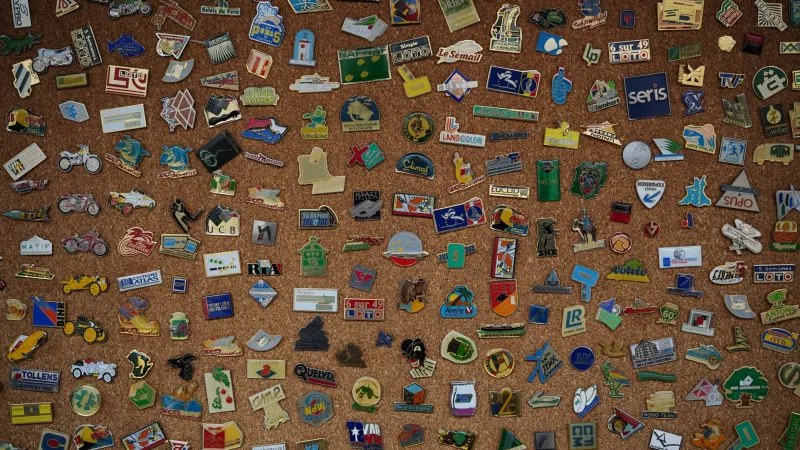
Old Wigan badges are lovely things, but the market is thick with modern reproductions. Genuine vintage enamel badges often have minor imperfections: tiny chips, uneven enamel, a maker's mark on the reverse, or a pin that has rusted in place. Modern copies can look almost too crisp, with uniform colour and a shiny, flat reverse. A sticker residue mark saying made abroad is a warning, not proof, but it should affect what you pay.
Crest changes give you a rough date range. The Wigan Warriors name and branding arrived in the late 1990s, so badges using the older Wigan RLFC style belong to an earlier period. That does not make them rare, but it does make them easier to place. Check the fastening too: butterfly clasps, pin backs and safety pins all point to different manufacturing eras. If a seller wants £30 for a badge that looks freshly minted, ask to see the reverse before you decide.
Signed shirts: the biggest trap of the lot
A signed Wigan Warriors shirt can be a wonderful thing, but it is also where inexperienced buyers lose the most money. Provenance is everything. A certificate of authenticity from the club, a charity event, or a documented signing session is worth far more than a typed note from an online seller. A photograph of the player signing that specific shirt is better still. Without that, treat the signatures as decorative rather than valuable.
Look closely at the ink. Genuine marker signatures fade, bleed slightly into the fabric and vary in pressure. Printed replicas are usually too neat and too consistent. Check the laundry tag and the inside of the shirt for signs of wear; a shirt that has been washed repeatedly may have signatures that are already breaking down. Framing can hide a multitude of sins, so ask for photographs of the shirt out of the frame if you are buying online.
A shirt signed by one player is not the same as a full-squad shirt. A full-squad shirt with good provenance can be worth serious money; a single scrawl with no paperwork is a nice piece of fan memorabilia, not an investment. Do not let a seller's story about meeting the team substitute for evidence.
Commemorative issues and limited editions
Coins, plates, framed prints and presentation boxes are marketed hard around finals and anniversaries. Some are well made and worth having; many are mass-produced with the word limited attached. Check the actual edition size and compare completed sales rather than asking prices. A commemorative coin that originally sold for £20 should not suddenly become a £100 bargain because it comes in a velvet pouch.
Car-boot sellers often have these items because they were gifts that never found a home. That is fine if you like the object, but do not buy it as a pension. In 2026, the online market is deep enough that most modern commemorative pieces can be found again with a little patience.
Condition: paper, metal and fabric
Paper suffers from damp, sunlight and rusty staples. Foxing, water stains and heavy creasing all reduce value, though a little wear on a scarce final programme is acceptable. Store programmes in acid-free sleeves and keep them out of the loft. Badges should be kept dry; enamel chips and bent pins are the main issues. Shirts should be kept out of direct sunlight, and autographs should not be pressed under glass without a mount that allows the fabric to breathe.
Do not over-clean anything. A rubbed badge loses its surface, and a scrubbed programme loses its history. Buy the item you can see, not the story you are told. A modest programme in honest condition is usually a better buy than a so-called rare piece with a hidden stain and a hopeful price tag.