Date Stamps and Dead Branches: Reading Wigan's Old Library Tickets
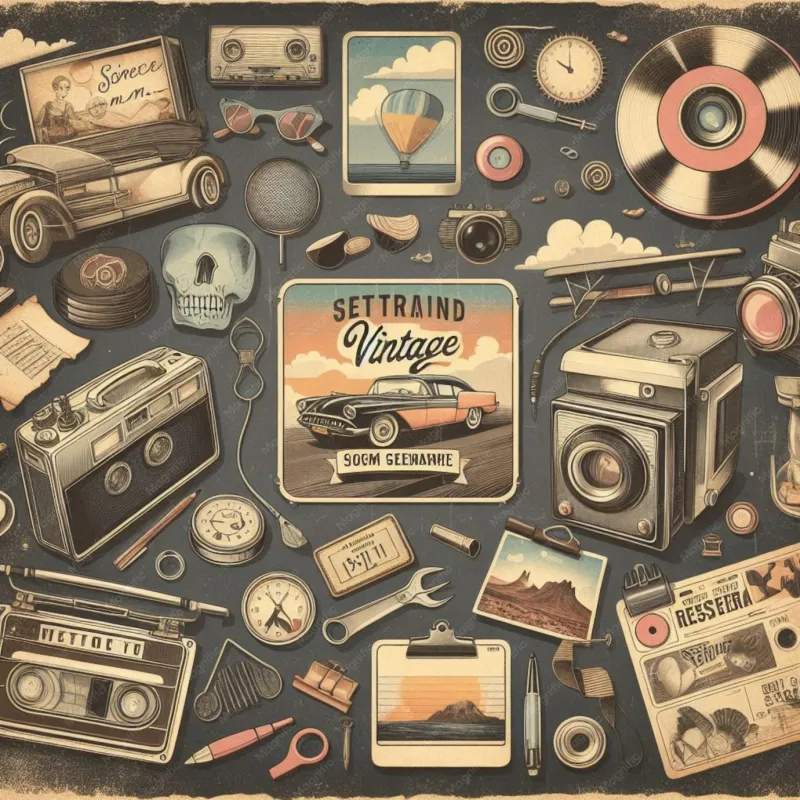
Photo: vintage library borrowers card with date stamps and card pocket, via img.freepik.com
Slip a fifty-pence paperback off a charity shop shelf and there is a decent chance something falls out: a card pocket, a date label, a ticket with a name and an address written in ink that has faded to brown. Most people drop it in the bin on the way to the till. A few of us put it in our pocket instead, because library paper is the most overlooked corner of Wigan's printed past.
The cheapest paper trail in town
Library ephemera has everything a collector wants except glamour. It is local, it is dated, it carries names and places, and because it was produced in quantity and thrown away without sentiment, it has never been properly priced. A borrower's ticket costs less than a lottery scratchcard. A bookplate still pasted in a withdrawn hardback can be had for the price of the book, which is often twenty pence.
That is not a reason to sneer. It is a reason to look properly.
What a borrower's ticket actually tells you
The classic ticket is a small card carrying the library's name, the reader's name and address, a ticket number and, sometimes, the branch. Earlier versions were often sturdier — card tickets kept behind the counter, or tokens issued to subscribing members of a circulating library rather than a free public one. Those are the ones worth a second glance, because institutional and commercial libraries left far less behind than the borough system did.
Read the address first. A ticket from a house in Hindley or Aspull is a fragment of a real household. The ticket number is your second clue: low numbers tend to mean earlier issues, though numbering sometimes restarted at each branch, which is why a neat 'no. 47' is not automatically a Victorian treasure.
Branch names are a gazetteer of a lost borough
This is the real joy. Library paper preserves the names of places that have quietly dropped off the map: branch libraries in Ashton, Orrell, Abram, Standish, Pemberton, Aspull, Shevington, Platt Bridge, Beech Hill, Marsh Green, Norley Hall, Goose Green, Worsley Mesnes. Some are still lending. Some are community buildings, some are flats, some are car parks.
Mobile library material is scarcer than branch material and, to my mind, more charming — a timetable, a stop list, a dated slip from a van that parked outside a pub once a fortnight. It turns up rarely, it is usually cheap, and almost nobody else is looking for it, which is exactly the sort of thing that makes a collection feel like yours rather than a shopping list.
Withdrawal stamps: the biography at the back
A book that has been retired usually says so. Look for 'WITHDRAWN' or 'DISCARDED' stamped in red, a perforated library mark, a pencilled price, a 'SOLD' stamp, or a date stamp that stops abruptly in a particular year. Do not treat these as damage. They are the working life of the object written down, and they usually date the item far more reliably than a seller's guess.
The same goes for the humble date label. A slip with rows of dates stamped in purple ink can tell you a book was borrowed steadily for a decade, or never at all. Both are interesting. Neither is worth a fortune, and anyone telling you otherwise is selling you an idea rather than an object.
Bookplates deserve a closer look
Pasted inside the front board, bookplates were the library's way of saying thank you, or of stating the rules, or both. Donor plates — 'presented by', 'from the collection of' — are the pick of the bunch, because they carry a name and often a date. Some are decorative, some are strictly functional, and a few are genuinely nicely printed.
Condition is where most of these fall down. Plates lift at the corners, fox, or get partially torn away with the endpaper. A clean, firmly attached plate in a book that is otherwise sound is a good thing to buy. A plate held on with a strip of yellowing tape is not, unless the donor name is one you particularly want.
Honest wear versus damage
Foxing is normal and forgivable. Stamp bleed-through is normal. What you want to avoid is the stuff that will spread: mould, active woodworm in the boards, water damage that has left tidelines, and any repair done with ordinary sticky tape. Ask for photographs of the reverse of a loose ticket before buying online — it is the fastest way to spot a modern reprint, and, sadly, the fastest way to spot a photocopy sold as an original.
What to pay
Common branch tickets, loose and unremarkable: pennies to a couple of pounds. Early twentieth-century tickets with a clear Wigan address and a date: perhaps five to fifteen pounds, though you may wait a long while for a buyer. Good bookplates sold on their own: a few pounds each. Framed arrangements of a ticket, a date label and a photograph of the branch: considerably more than the parts, which is fine, because you are paying for the framing and the idea.
Where the genuine scarcity sits is in the paperwork nobody kept: branch opening programmes, librarian's date stamps, mobile library timetables, reading-circle cards. Buy those when you see them, keep them flat, and do not let anyone tell you they are 'just old paper'.